
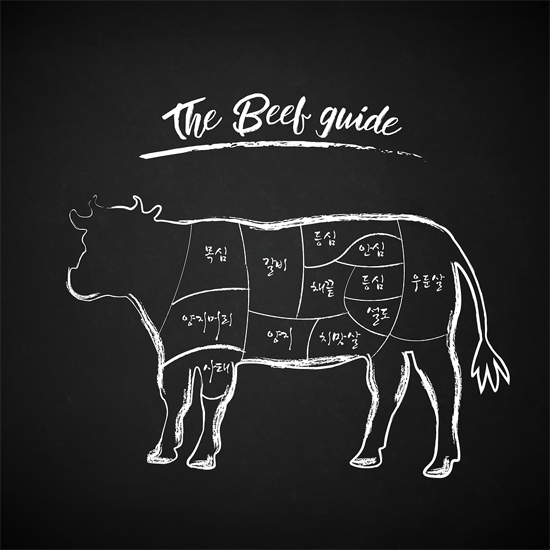
Tenderloin is a single muscle located on the inner side of the abdominal cavity, beneath the sirloin, at the end of the lumbar vertebrae. Generally, meat from well-exercised muscles is tough and coarse. However, because the tenderloin is located within the abdominal cavity, it gets minimal exercise, making it the most tender of all beef cuts. This is why it’s often the first cut introduced when discussing beef.
About 5.8 kg of tenderloin is produced from one cow. It typically has a deep crimson color and a texture as fine as silk. As the most tender and soft cut of beef, tenderloin has very little intramuscular fat (marbling), so it can become tough if cooked or boiled for too long. It also has a high content of myoglobin, giving it a deep color, and can discolor quickly, so be cautious. Because tenderloin is lean and mild, it’s great for diet-friendly dishes and is best suited for grilling, steak, or jangjorim (soy-braised beef).
Sirloin: A Blend of Flavor and Tenderness
Composed of a single muscle, sirloin is bright crimson in color, with a fine, soft grain and evenly distributed marbling. When grilled appropriately, you can fully enjoy its rich juices and the flavor of its marbling. However, since it lacks intermuscular fat, you must be careful not to overcook it, as it can become dry or tough. In other countries, sirloin is mainly used for steak, but in Korea, it’s also excellent for sanjeok (skewered meat) or neobiani (marinated and grilled beef).